
Download Files:
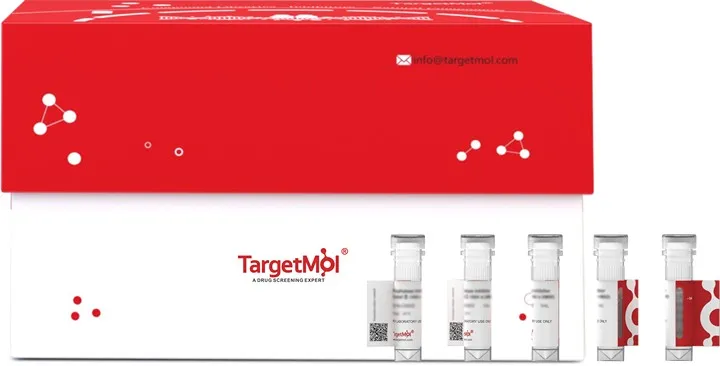
C1s Protein, Human, Recombinant (His)
1,120 CAD
Only 1000 item(s) left in stock.
Products Details
Product Description
– Complement is an integral component of the adaptive and innate immune systems and represents one of the major effector systems for the immune responses. The classical complement pathway is triggered by C1, a complex composed of the binding protein C1q and two proenzymes, C1r and C1s. Upon binding of IgG to the head of C1q, C1r undergoes autoactivation and in turn cleaves and activates C1s. C1r and C1s, the proteases responsible for activation and proteolytic activity of the C1 complex of complement, share similar overall structural organizations featuring five nonenzymic protein modules (two CUB modules surrounding a single EGF module, and a pair of CCP modules) followed by a serine protease domain. Besides highly specific proteolytic activities, both proteases exhibit interaction properties associated with their N-terminal regions. In contrast, C1r and C1s widely differ from each other by their glycosylation patterns: both proteins contain Asn-linked carbohydrates, but four glycosylation sites are present on C1r, and only two on C1s. As a highly specific serine protease, C1s executes the catalytic function of the C1 complex: the cleavage of C4 and C2, and thus instigates a sequence of activation steps of other components of the complement system, culminating in the formation of the membrane attack complex which induces cell lysis. Like other complement serine proteases C1s has restricted substrate specificity and it is engaged into specific interactions with other subcomponents of the complement system. The only other protein known to interact with C1s physiologically is SerpinC1, an inhibitor of serine protease, which inhibits C1s activity and thus plays a regulatory role in controlling the function of C1s enzyme.
Web ID
– TMPY-06585
Storage Temperature
– -20℃
Shipping
– Blue Ice
References
– Arlaud GJ, et al. (1989) Structure and function of C1r and C1s: current concepts. Behring Inst Mitt. (84): 56-64.
Molecular Weight
Product type
– Recombinant-Protein
Disclaimer: All products are for Research use only unless clearly stated otherwise on the product datasheet. Datasheets provided on the website are drafts for reference purpose only and you are requested to always refer to the hard copy included in the kit for your experimentation. Agdia Products are available for delivery only in Canada.
Related Products
Outer membrane protein Omp38, Acinetobacter baumannii, Recombinant (His & Myc)
576 CAD – 4,048 CADPrice range: 576 CAD through 4,048 CAD
1000 in stock
Abrin-a Protein, Abrus precatorius, Recombinant (E. coli, His)
576 CAD – 4,048 CADPrice range: 576 CAD through 4,048 CAD
1000 in stock
Abrin-a Protein, Abrus precatorius, Recombinant (Yeast, His)
635 CAD – 4,752 CADPrice range: 635 CAD through 4,752 CAD
1000 in stock
CD133/PROM1 Protein-VLP, Human, Recombinant (His)
1,304 CAD – 17,280 CADPrice range: 1,304 CAD through 17,280 CAD
1000 in stock
YAP1 Protein, Human, Recombinant (Isoform 9, His)
370 CAD – 2,128 CADPrice range: 370 CAD through 2,128 CAD
1000 in stock
