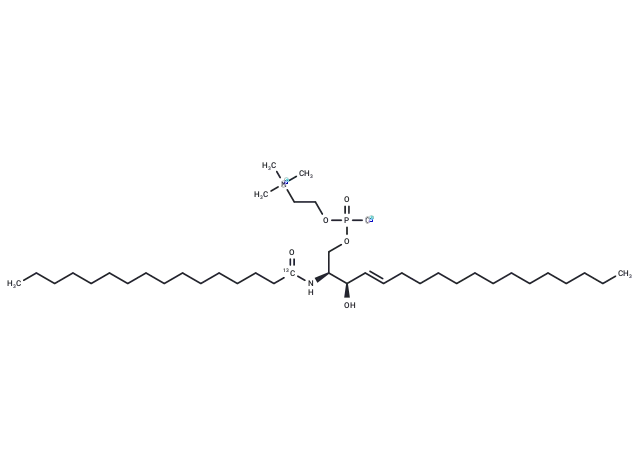
– 13C C16 Sphingomyelin is an isotopically enriched form of C16 sphingomyelin with carbon-13 occurring on the fatty acid portion. It is intended for use as an internal standard for the quantification of C16 sphingomyelin by GC- or LC-MS. C16 Sphingomyelin is a form of sphingomyelin containing palmitate (16:0) at the variable acylation position. It is the most common form of sphingomyelin found in eggs and is less abundant in the brain and in milk. C16 Sphingomyelin interacts with cholesterol in ordered lipid domains (lipid rafts). Sphingomyelinases remove phosphorylcholine from C16 sphingomyelin to produce C16 ceramide. While ceramides commonly induce apoptosis, ceramides with different fatty acid chain lengths might direct distinct functions and, in some cases, reduce apoptosis.
Disclaimer: All products are for Research use only unless clearly stated otherwise on the product datasheet. Datasheets provided on the website are drafts for reference purpose only and you are requested to always refer to the hard copy included in the kit for your experimentation. Agdia Products are available for delivery only in Canada.