109 CAD–1,571 CADPrice range: 109 CAD through 1,571 CAD
Products Details
Product Description
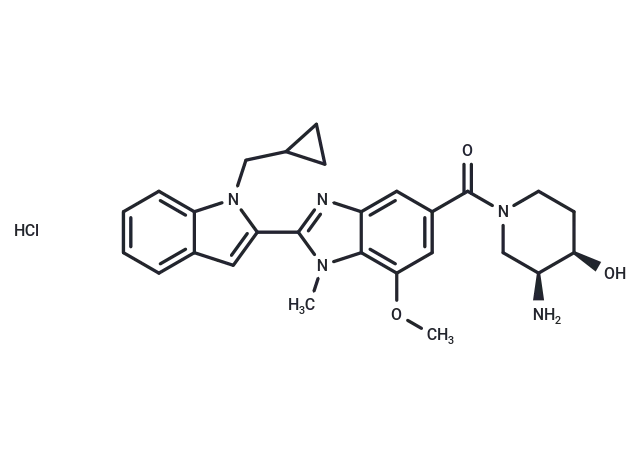
– GSK484 hydrochloride (GTPL8577) is a reversible peptidyl-arginine deiminase 4 (PAD4) inhibitor. It binds to PAD4 with high affinity, with IC50 of 250 and 50 nM in the presence and absence of 2 mM calcium, respectively. GSK484 promotes the radiosensitivity of colorectal cancer (CRC) and inhibits NET formation in vitro and in vivo.
Web ID
– TQ0067
Storage Temperature
– -20℃
Shipping
– Blue Ice
Molecular Formula
– C27H32ClN5O3
Citations
– 1. Chen J, Zhao L, Ding X, et al. Aβ1–40 Oligomers Trigger Neutrophil Extracellular Trap Formation through TLR4- and NADPH Oxidase-Dependent Pathways in Age-Related Macular Degeneration. Oxidative Medicine and Cellular Longevity. 2022
References
– Lewis HD, et al. Inhibition of PAD4 activity is sufficient to disrupt mouse and human NET formation. Nat Chem Biol. 2015 Mar;11(3):189-91.
Disclaimer: All products are for Research use only unless clearly stated otherwise on the product datasheet. Datasheets provided on the website are drafts for reference purpose only and you are requested to always refer to the hard copy included in the kit for your experimentation. Agdia Products are available for delivery only in Canada.