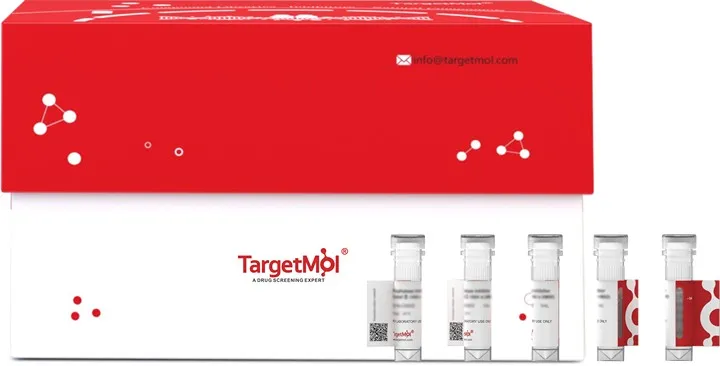
SARS-CoV-2 PLpro/papain-like protease Protein (His & Avi)

SKU TMPK-01352-100 μg Category Brand:

Price range: 370 CAD through 1,491 CAD

Products Details

Product Description

– The coronaviral proteases, papain-like protease (PLpro) and 3C-like protease (3CLpro), are attractive antiviral drug targets because they are essential for coronaviral replication. Although the primary function of PLpro and 3CLpro are to process the viral polyprotein in a coordinated manner, PLpro has the additional function of stripping ubiquitin and ISG15 from host-cell proteins to aid coronaviruses in their evasion of the host innate immune responses. SARS-CoV-2 PLpro/papain-like protease Protein (His & Avi) is expressed in E. coli expression system with N-His-Avi tag. The predicted molecular weight is 38.6 kDa and the accession number is P0C6U8.

Web ID

– TMPK-01352

Storage Temperature

– -20℃

Shipping

– Blue Ice

References

– Báez-Santos YM, et al. The SARS-coronavirus papain-like protease: structure, function and inhibition by designed antiviral compounds. Antiviral Res. 2015 Mar;115:21-38. doi: 10.1016/j.antiviral.2014.12.015. Epub 2014 Dec 29. PMID: 25554382; PMCID: PMC5896749.

Molecular Weight

Product type

– Recombinant-Protein

Disclaimer: All products are for Research use only unless clearly stated otherwise on the product datasheet. Datasheets provided on the website are drafts for reference purpose only and you are requested to always refer to the hard copy included in the kit for your experimentation. Agdia Products are available for delivery only in Canada.

My Cart
Wishlist
Recently Viewed
Categories

Request Data Sheet / Safty Data Sheet

Please enable JavaScript in your browser to complete this form.
=

Price Request

Please enable JavaScript in your browser to complete this form.
=

Compare Products (1 Product)
document.addEventListener('elementor/popup/show', function() { if (typeof turnstile !== 'undefined') { document.querySelectorAll('.cf-turnstile').forEach(function(el) { if (!el.dataset.rendered) { turnstile.render(el); el.dataset.rendered = true; } }); } });