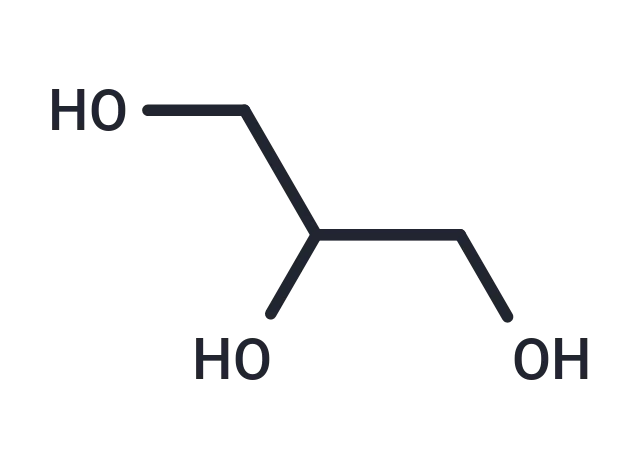
– Glycerol or glycerin is a colourless, odourless, viscous liquid that is sweet-tasting and mostly non-toxic. It is widely used in the food industry as a sweetener and humectant and in pharmaceutical formulations. Glycerol is an important component of triglycerides (i.e. fats and oils) and of phospholipids. Glycerol is a three-carbon substance that forms the backbone of fatty acids in fats. When the body uses stored fat as a source of energy, glycerol and fatty acids are released into the bloodstream. The glycerol component can be converted into glucose by the liver and provides energy for cellular metabolism. Normally, glycerol shows very little acute toxicity and very high oral doses or acute exposures can be tolerated. On the other hand, chronically high levels of glycerol in the blood are associated with glycerol kinase deficiency (GKD). GKD causes the condition known as hyperglycerolemia, an accumulation of glycerol in the blood and urine. There are three clinically distinct forms of GKD: infantile, juvenile, and adult. The infantile form is the most severe and is associated with vomiting, lethargy, severe developmental delay, and adrenal insufficiency. The mechanisms of glycerol toxicity in infants are not known, but it appears to shift metabolism towards chronic acidosis. Acidosis typically occurs when arterial pH falls below 7.35. In infants with acidosis, the initial symptoms include poor feeding, vomiting, loss of appetite, weak muscle tone (hypotonia), and lack of energy (lethargy). These can progress to heart, liver, and kidney abnormalities, seizures, coma, and possibly death. These are also the characteristic symptoms of untreated GKD. Many affected children with organic acidemias experience intellectual disability or delayed development. Patients with the adult form of GKD generally have no symptoms and are often detected fortuitously.
Web ID
– T4776
Storage Temperature
– -20℃
Shipping
– Blue Ice
Molecular Formula
– C3H8O3
References
– Sweatman B C , Farrant R D , Holmes E , et al. 600 MHz 1H-NMR spectroscopy of human cerebrospinal fluid: effects of sample manipulation and assignment of resonances.[J]. Journal of Pharmaceutical & Biomedical Analysis, 1993, 11(8):651-64.
Disclaimer: All products are for Research use only unless clearly stated otherwise on the product datasheet. Datasheets provided on the website are drafts for reference purpose only and you are requested to always refer to the hard copy included in the kit for your experimentation. Agdia Products are available for delivery only in Canada.