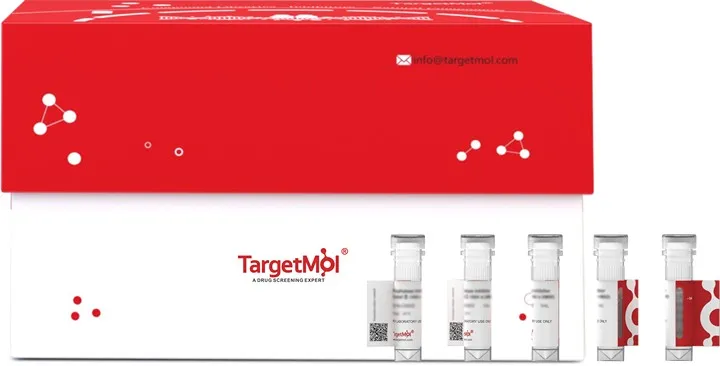
BirA Protein, E. coli, Recombinant (His & MBP)

SKU TMPY-03650-100 μg Category Brand:

Price range: 618 CAD through 2,144 CAD

Products Details

Product Description

– The enzyme BirA is a key reagent because of its ability to biotinylate proteins at a specific residue in a recognition sequence. This enzyme is used to biotinylate the C termini of membrane proteins, allowing these proteins to be tetramerized by binding to streptavidin. Because of the specificity of the biotinylation at the C terminus, the orientation of the membrane proteins on the streptavidin is equivalent to that of the native protein on the cell surface. These tetrameric proteins can be used to study protein receptor-ligand interactions at the cell surface, and site-specific biotinylation can be used to study proteins in vitro using a defined orientation. The biotinylation of histones by BirA ligase is consistent with the proposed role of human HCS in chromatin. The N-terminal BirA domain is required for both transcriptional regulation of biotin synthesis and biotin protein ligase activity.

Web ID

– TMPY-03650

Storage Temperature

– -20℃

Shipping

– Blue Ice

Molecular Weight

Compound Purity

– 0.948

Product type

– Recombinant-Protein

Disclaimer: All products are for Research use only unless clearly stated otherwise on the product datasheet. Datasheets provided on the website are drafts for reference purpose only and you are requested to always refer to the hard copy included in the kit for your experimentation. Agdia Products are available for delivery only in Canada.

My Cart
Wishlist
Recently Viewed
Categories

Request Data Sheet / Safty Data Sheet

Please enable JavaScript in your browser to complete this form.
=

Price Request

Please enable JavaScript in your browser to complete this form.
=

Compare Products (0 Products)
document.addEventListener('elementor/popup/show', function() { if (typeof turnstile !== 'undefined') { document.querySelectorAll('.cf-turnstile').forEach(function(el) { if (!el.dataset.rendered) { turnstile.render(el); el.dataset.rendered = true; } }); } });